If you own a compact yard in Winnipeg, you’ve met the winter paradox. You want a hot tub, you deserve a hot tub, yet you’re looking at a postage-stamp patio and a snowbank the size of a small sedan. The good news is that small spaces can be coaxed into doing big work. With the right shape, siting, and a few clever design moves, you can fit a hot tub into a surprisingly modest footprint and make it feel intentional rather than shoehorned. I’ve helped homeowners tuck spas beside garden sheds, under second-story decks, and into corners that previously hosted nothing but recycling bins. The trick is to think in layers: privacy, access, maintenance, and ambiance, all working together like a well-behaved neighborhood association.
Below, you’ll find the playbook I use when walking a property. You’ll see real dimensions, layout ideas that respect Winnipeg’s climate, and trade-offs that installers will quietly judge you for if you ignore. If you’ve already been browsing “Hot tubs for sale” and Googling “Hot tubs store near me,” use this as your lens before you pick a shell color you’ll have to live with for a decade.
Start with the envelope: clearances, loads, and the Winnipeg winter reality
Before you imagine cedar slats and twinkly lights, check the fundamentals. Hot tubs are heavy and need access on at least one side for service, sometimes all around depending on the model. A small yard doesn’t give you room to fudge.
A compact 2 to 4 person tub typically measures 5 by 7 feet to 6 by 6 feet, and once filled can weigh in the range of 2,000 to 4,000 pounds with people inside. Most manufacturers recommend 18 to 24 inches of clearance on the equipment side for maintenance. In a tight yard, you can often negotiate less clearance on non-service sides by installing removable panels or planning for a rolling tub cart if the tub ever needs to be shifted. Ask your installer exactly which side houses the pump and control pack, then orient the tub so the service side faces an open path rather than a fence post.
In Winnipeg, frost heave is not a hypothetical. Concrete slabs should be 4 to 6 inches thick with rebar and a proper compacted base, or you can use screw piles and a framed platform if access is limited. The slab should be dead level. Slight slopes that shed rain may work for a patio, but a tub needs level support to prevent stress on the shell. I’ve seen one cheap paver base cost a homeowner a pump, a new cover, and three service calls. Don’t skimp on the platform. The platform is the quiet hero you never Instagram.
Electrical is straightforward but non-negotiable. A 240-volt GFCI-protected circuit, usually 40 or 50 amps, is standard for most modern tubs, routed in conduit. The shortest, cleanest electrical run typically dictates the most sensible tub location. For a truly tiny yard, shaving six feet off the conduit run can save enough budget to buy a proper cover lifter and a step system that doubles as storage.
Finally, snow management. Where does it go when you shovel? The best small-space layouts assume you’ll need to clear a path to the tub three to four times a week in midwinter. Give yourself a straight, direct route and a landing zone for snow that won’t block the service panel or bury your breaker.
Choosing a tub that fits your life and your footprint
Hot tubs are not one-size-fits-all, especially when the yard is tight. Think in terms of priorities: hydrotherapy, social seating, budget, and the ritual you want to build.
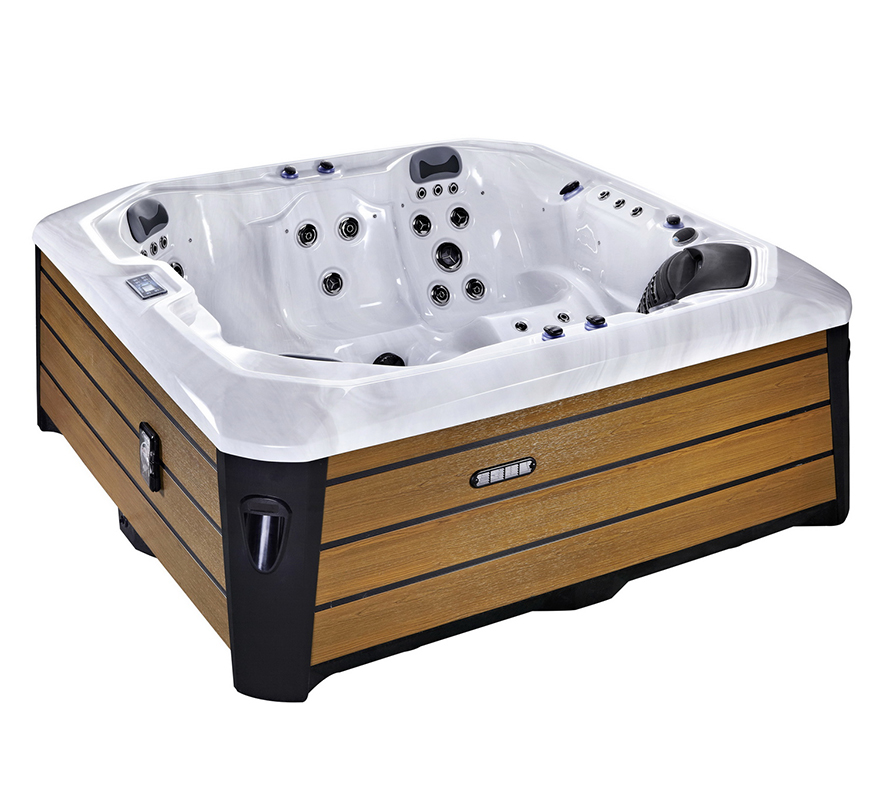
Compact models. If your space is closer to a balcony than a lawn, look at 5 by 6 or true 6 by 6 shells. Two lounger seats may look appealing on a spec sheet, but they steal internal real estate. A corner-seat design with an open footwell often feels larger than its dimensions, and it’s easier to swing your legs in when there’s a fence two feet away. A square 6 by 6 typically seats four without elbows grazing. Oval styles help when you’re tucking into a long, narrow side yard.
Plug-and-play tubs. They can be a smart bridge for renters or for test-driving the habit. Most 110-volt plug-in models won’t keep pace at minus 25 Celsius if rolled foam insulation is the only barrier. Some of the better units with full-foam insulation do surprisingly well, but heating recovery will be slower. If you plan winter soaks three nights a week, invest in a 240-volt unit from the start.
Jet quality over jet count. Manufacturers love numbers. Your back does not. In small tubs, targeted jets at the shoulders, mid-back, and calves are worth more than a constellation of tiny ports. Ask to wet test if possible. Any reputable Winnipeg Hot Tubs dealer who knows the market will either have a test unit ready in-store or arrange a demo.
Water care that won’t own your weekends. Small tubs have less volume, which means chemistry shifts faster. Ozone and UV add-ons help, but they don’t replace basic testing. If your tub sits two feet from the kitchen door, you’re more likely to use it nightly, which means skin oils climb. Balance becomes routine if your tub has a simple filter access and you keep water changes on a 3 to 4 month cycle. In a small yard, hauling buckets is annoying, so budget for a backwash hose and a clear drain route.
Orienting the tub: where to put it so the yard still works
Most small yards in Winnipeg fall into three categories: the long, skinny side yard; the square, fenced backyard; and the under-deck zone that sits oddly empty. Each can host a tub with a little planning.
Side yard stealth. Treat a side yard like a corridor. Place the hot tub halfway down the run so you preserve easy access from the front and back. Flank it with vertical elements that feel like architecture rather than storage. A slatted cedar screen on one side and the house siding on the other creates a cozy, wind-protected pocket. Leave at least 36 inches on the service side. If your lot line is tight, verify setback rules and mind the eaves. Tubs humming under a neighbor’s bedroom window are the fast track to passive-aggressive snowblower wars.
Square backyard focus. In a compact square, push the tub to a corner, then treat that corner as its own room. I like a diagonal orientation if the yard allows, because it opens sightlines across the water and makes the corner feel intentional. Use the tub lip parallel to a patio edge if you plan to set chairs nearby. Keep the distance from the back door under 20 feet for winter, and choose the corner with the least wind exposure. In Winnipeg, northwest winds bite. A simple, wind-tough screen or a hedge of columnar spruce transforms the experience.
Under-deck magic. If your deck has more than 7 feet of headroom underneath, you’ve got a built-in roof. Tuck the tub there and you get three gifts: shelter from snow, a sense of enclosure, and a shorter walk. You’ll need proper vapor barriers and ventilation so humidity doesn’t rot the joists. Add dimmable puck lights on the underside of the deck and a rubberized mat path to keep ice at bay. It becomes a winter cave in the best way.
Screens, fences, and borrowed privacy
Privacy makes a small yard feel bigger because your eye stops traveling at the right moment. You don’t need fortifications, but you do need a plan that works through all four seasons.
Cedar screens are the go-to because they age gracefully and shrug off the cold. If you use horizontal slats, tighten the spacing near seated eye level and widen it at the bottom for airflow. A single 6 by 6 foot panel placed strategically can obscure a neighbor’s kitchen window without boxing you in. L-shaped screen pairs define a corner hot tub beautifully. Paint or stain dark to let the tub and lighting pop.
Fences provide the legal privacy baseline, but wind whistles through typical gaps. Consider a section of tongue-and-groove boards near the tub for a wind block. If you have a chain-link fence, plant a narrow hedge like upright yew or North Pole arborvitae and run a string of low-voltage lights at knee height. You’ll get a soft glow on snow instead of a prison-yard vibe.
Borrowed scenery elevates everything. Position the tub so you look toward a tree, a trellis, or, if you’re lucky, a slice of sky between houses. Even a single birch or aspen breaks up the urban geometry. In summer, a simple reed screen adds texture without heft. In winter, evergreens carry the scene while everything else sleeps.
The cover conundrum solved in small spaces
Covers are bulky, awkward, and unavoidable. In a small yard, the wrong cover lifter makes the space feel like a storage locker. The right one becomes part of the furniture.
Side-mount lifters, which swing the cover to one side, work best when the tub sits near a fence or screen. They require 12 to 18 inches of clearance. A rear-mount lifter needs more room behind the tub but can double as a privacy shield when the cover is open, an underrated perk in tight yards.
Hydraulic-assisted lifters earn their keep in winter when foam goes stiff. If your yard is so small that you’re staring at the lifter mechanism, choose a model with cleaner lines and a powder-coated finish that matches your screen hardware. Don’t park the cover against your neighbor’s fence where snow will pin it every storm. Aim the fold toward your own open area, and you’ll use the tub more often because you won’t dread the wrestling match.

Steps that don’t steal space
You’ll need steps, especially when snow slicks every surface. In a small footprint, steps can multitask. Deep, two-tread units with internal storage tuck chemicals, test strips, and a spare robe into a weatherproof cubby. If you’ve oriented the tub in a corner, slide the steps on the inside edge so you step down into the patio rather than toward a fence. Grippy treads, not smooth plastic, are worth the extra dollars. And if you want one elegant flourish that improves safety, add a single post handrail anchored to the step base.
Heat, light, and the Winnipeg factor
Minus 30 is a character-building temperature. Your tub can handle it, but you’ll enjoy it a lot more with smart heat and light planning.
Radiant paths feel luxurious and practical. You don’t need a full in-slab system to get the effect. Two heating mats under pavers for the 8 to 12 feet between your back door and the tub make shoveling optional. If that’s not in the budget, a rough broom finish or textured paver gives traction, and a bucket of eco-friendly ice melt parked nearby saves you the midnight scramble.
Lighting should be low and warm, not bright and interrogative. Think in layers: a soft wash from a wall sconce, a subtle strip under a step, a glow from the screen edges. In heavy snowfall, fixtures with downward shields keep glare off the flakes. Avoid blue-toned LEDs, which make everything feel colder. Warm white at 2700 to 3000K makes steam look like a spa commercial and doesn’t blind you when you head back inside.
As for operating costs, a well-insulated tub with a proper winter cover and a tight skirt uses less energy than most people expect. Many homeowners in Winnipeg report monthly increases in the 30 to 60 dollar range through deep winter for a compact 240-volt tub, more if the tub is large and set hot. Keep the cover latched and the wind off the cabinet, and you’ll be pleasantly surprised.
Small-yard layouts that punch above their size
You don’t need acres to feel luxurious. Here are three layout archetypes I lean on for tight spaces, with dimensions that actually fit in city lots.
The corner nest. A 6 by 6 foot tub sits in the back-left corner of a 16 by 24 foot yard. A 6 by 6 cedar screen forms an L behind it, set 12 inches off the fences to keep airflow and access. Steps face inward toward the patio. A narrow planter box runs along the screen base for herbs in summer and LED candles in winter. You look diagonally across the yard rather than at boards. This gives you the largest contiguous open area for a small cafe table or two chairs without pinballing around hardware.
The side lane spa. In a 6 to 8 foot wide side yard, orient a 5 by 7 foot tub lengthwise on a proper slab. Mount a side-lifter so the cover swings over a decorative river rock strip instead of crowding the walking path. A 24-inch wide cedar slat wall hugs the house side at shoulder height to block wind, while the fence side stays open with climbing hydrangea or clematis in summer. Low-voltage path lights sit at 12 inches high so snow drifts don’t swallow them. You gain a private corridor that feels intentional, not like a leftover.
The under-deck lounge. With 7 feet 6 inches headroom under a deck, lay a 6 by 6 tub parallel to the house wall. Install beadboard soffit with vents, a moisture barrier, and two dimmable fixtures. A rubberized runner connects the back door to the tub steps. One 4 by 6 foot area beside the tub hosts a bench with towel hooks and a small cabinet for hats and gloves. You’re sheltered in blowing snow and can soak with your coffee as the city wakes up.
Working with the right retailer and installer
A small yard amplifies every decision. The best local dealers have already encountered your exact constraints and learned which models and accessories actually fit. When you search Winnipeg Hot Tubs or drive around checking “Hot tubs store near me” results, bring a sketch of your yard with measurements. Note the door locations, any windows that overlook the yard, downspouts, and where snow tends to drift. Photos help, especially in winter when lush summer pictures lie.
Ask to see compact models on the floor. Sit in them with a partner wearing winter coats. If you bonk elbows in the showroom, you’ll bonk elbows at home. Ask about service access clearances, cabinet insulation style, and cover lifter compatibility. Request an on-site visit before you buy. A good dealer will spot gate width issues for delivery or warn you when a crane is the only safe option, which affects cost and timing.
If you’re shopping hot tubs for sale and spot a marked-down floor model, check whether the lifter and steps truly fit your intended orientation. Bargains evaporate when you have to swap hardware. And if a salesperson insists every 110-volt tub performs the same in January, find a different salesperson. Subzero winters sort the contenders from the pretenders.
Design choices that keep space open rather than chopped into bits
Small yards feel cramped when too many materials compete. Pick a limited palette and repeat it so the eye reads continuity. Cedar screens, charcoal pavers, and matte black metal make a crisp trio. Or Click here for more info warm gray composite, galvanized hardware, and dark-stained planters. The tub cabinet finish should either harmonize or disappear. Dark cabinets tend to recede in Winnipeg’s snow months, helping the water and steam take center stage.
Keep furniture scaled properly. A bistro table with two slender chairs beats chunky loungers you can’t walk around. Resist the urge to cram in a fire pit, a storage bench, and a chaise. Let the hot tub be the anchor, then give yourself a single supporting element, like a compact bench with cushions that store indoors.
Plants earn their keep when they do double duty. Upright evergreens create privacy and winter structure. Summer annuals add pluck, but save precious space for perennials that hang tough: feather reed grass for height in tiny footprints, dwarf hydrangeas for late-season color, and hostas in shaded corners under decks. In containers, go taller than you think and cluster sparingly. Three large planters beat seven small ones that clutter the floor.
Maintenance inside a small footprint
Maintenance gets easier when everything has a home. In tight yards, hidden storage is your ally. Steps with compartments swallow test kits and spare filters. A slim cabinet under a screen panel can hold chemicals, a soft broom, and a towel basket. Keep a hose connection nearby so water changes don’t turn into a serpentine dance around the house.
Schedule becomes your friend. Mark your phone to remind you to rinse filters every two to three weeks and deep clean them every two to three months. In winter, leave a spare dry filter ready to swap, then clean the wet one indoors where your hands won’t freeze. Set your water temperature with your actual habit, not a fantasy. Many Winnipeg owners land between 100 and 102 Fahrenheit. Every degree higher raises operating cost a bit and can shorten soak times, which matters when your yard invites a nightly ritual.
Safety without the eyesore
Small yards often share sightlines with neighbors and sidewalks. Safety can be subtle. A locking cover is essential with children nearby. Consider a simple, compact gate lock on the yard fence even if the cover locks. Anti-slip surfaces are the quiet hero on cold nights. Textured pavers, rubber stair treads, and a small bench to sit while you put on slippers reduce the chance of a graceless slide on black ice.
Noise concerns are real in snug neighborhoods. Modern pumps and circ systems are quiet, but cabinet resonance can carry. Place the equipment side away from a shared fence when possible. A simple rubber isolation pad under the equipment bay and a dense evergreen or screen panel between the cabinet and the fence suppress hum.
Budget smart, spend where it shows every night
If your budget isn’t unlimited, spend first on a well-insulated shell, a high-quality cover, and the platform. Those three decide whether you love the tub after the novelty fades. Next, add a good lifter and grippy steps, because they decide whether you use the tub on Tuesday night when it is minus 18 and you are tired. Lighting and screens can phase in later without disrupting the setup.
If a dealer offers a package discount on water care kits, check shelf life. Some sanitizers and clarifiers lose potency if they sit in a cold shed all winter. Buy smaller quantities more often and keep them inside. That little discipline saves you from chasing odd chemistry and cloudy water in February.
When a small plunge beats a big spa
There is a case for a plunge-style tub in very small yards. A compact, deeper soak at 95 to 100 Fahrenheit in summer can still be used at 102 in winter if insulated well, and the vertical walls save footprint. If your ritual is short, meditative soaks rather than long conversation with four friends, the plunge route feels like a private onsen. The trade-off is fewer seats and fewer massage jets. If hydrotherapy for an old hockey injury is your priority, stick with a true spa.
Delivery realities in tight Winnipeg lots
Measure your gate opening. Most tubs arrive on their side on a cart and need 40 inches minimum, often more, with clearance above for eaves and wires. If your route includes stairs, narrow turns, or low decks, a crane might be the only option. Crane days look dramatic and feel like a community event. They also add a few hundred to a couple thousand dollars depending on reach and complexity. Planning early keeps surprises to a minimum and lets you schedule around the weather.
Winter deliveries are routine here. Crews know the drill. Clear ice, scatter grit on slopes, and mark the final tub location with stakes so nobody guesses under snow. If your slab went in late fall, protect it with plywood during delivery so the cart wheels don’t chip edges.
A final nudge toward the nightly ritual
The smallest yards I’ve worked on often produce the happiest hot tub owners. Constraints force focus. You trim fluff, you place things with intent, and you end up with a snug, beautiful corner that works twelve months a year. A good compact spa, smart screens, and a safe, lit path transform a yard you used to ignore after October into a place you seek out at midnight when the city is quiet and the sky goes clear. If you’re browsing Winnipeg Hot Tubs dealers or scrolling hot tubs for sale on a Sunday morning, bring your tape measure and your calendar. Space is solved with inches and habits, not just catalog photos.
And when you finally slide through a curtain of steam on a bitter night and can still see the yard lines under a dusting of snow, you’ll understand why a tiny backyard can carry a big life.